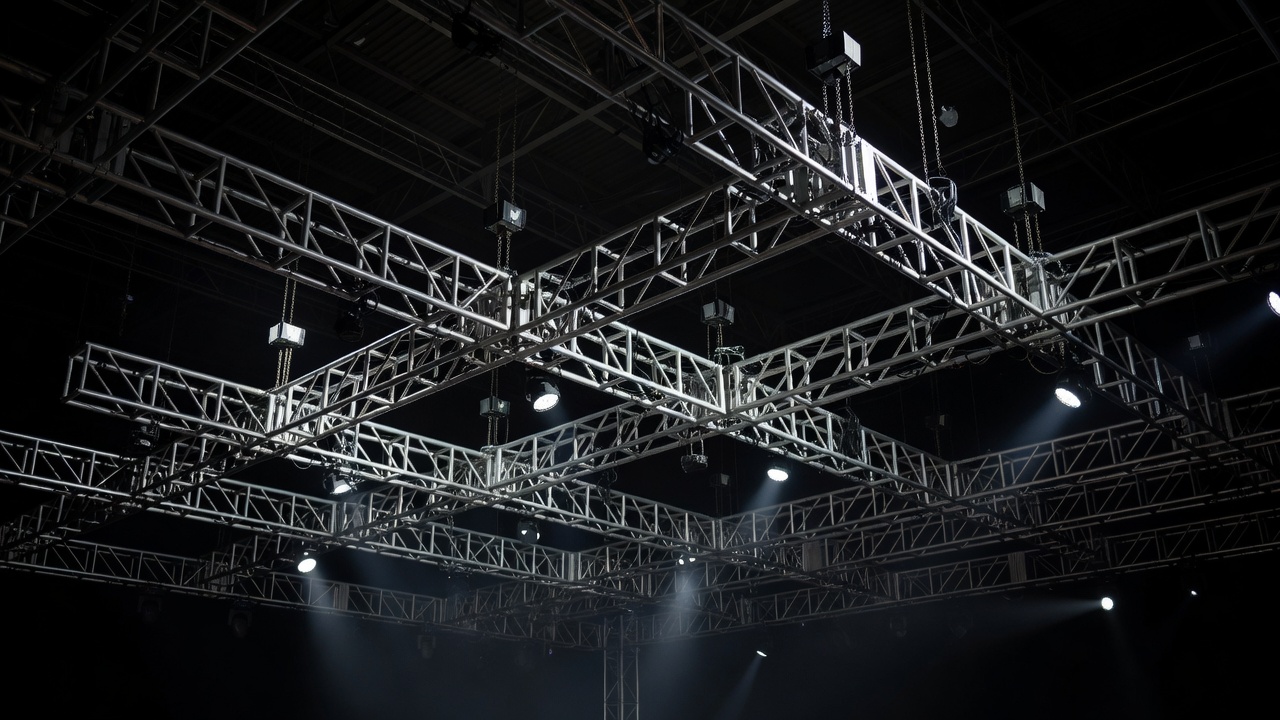
Understanding Static vs. Dynamic Live Loads
Every venue roof structure is engineered with specific structural point load ratings and total building grid capacities. When suspending heavy production grids, engineers categorize total weight into two main forces:
- Static Load: The dead weight of trusses, chain hoists, cabling, and mounted equipment at rest.
- Dynamic Load: Additional force generated during motor acceleration/deceleration, variable automation movement, or outdoor wind currents acting on exposed roof membranes.
ESTA E1.21 Safety Standards & Secondary Steels
Under ESTA E1.21 guidelines for temporary outdoor stage structures, all overhead rigging grids must maintain clear emergency load shed protocols. Master riggers are required to wrap secondary safety wire rope around main beam flanges, bypassing motor brake mechanisms once high-trim altitude is reached.
This ensures that even in the unlikely event of internal hoist mechanical brake friction loss, the secondary steel catches the load within less than 50 millimeters of vertical drop.
Bridle Force Vectors & Purline Point Load Limits
When direct vertical dead-hangs are unavailable due to beam alignment relative to stage placement, two-way bridles are rigged. It is essential to ensure that horizontal vector components do not exceed the lateral stability threshold of venue steel beams, which are primarily engineered for downward compression forces rather than sideways shear stress.